Reduce plywood waste
How to Reduce Plywood Waste: 12 Practical Shop Strategies
Reduce plywood waste by improving parts lists, kerf settings, grain rules, offcut inventory, sheet layout review, and purchasing decisions.
Research Lens
How can a personal builder use CutList to finish how to reduce plywood waste: 12 practical shop strategies with fewer mistakes?
The hobby workflow is strongest when the app is used as a planning checkpoint: define the project, enter accurate stock and parts, generate a visual layout, then use cost, waste, grain, kerf, PDF export, project history, and offline access to control the real cutting session.
Decision Metrics
Visual model
Reduce plywood waste: decision-to-action workflow
High-intent search advice becomes useful when the decision, controlling inputs, physical-fit review, execution handoff, and final revision stay connected.
Answer the Search Question First
People searching for “how to reduce plywood waste” usually want a method they can use today, not a gallery of perfect finished projects. The practical answer is to make one expensive decision explicit before work starts: whether a leftover is true waste, a reusable offcut, or evidence that the layout needs another revision. For DIY builders and small woodworking businesses, that decision controls the measurements, tools, material, sequence, and records that follow.
Collect the Inputs That Change the Result
Write down the variables that can change the plan: accurate quantities, real kerf, sheet defects, grain locks, material groups, trim cuts, offcut dimensions, storage limits, and future standard parts. Mark each value as measured, selected, assumed, or still waiting for approval. That small distinction prevents a convenient estimate from silently becoming a shop dimension or an installation promise.
Use a Reviewable Workflow
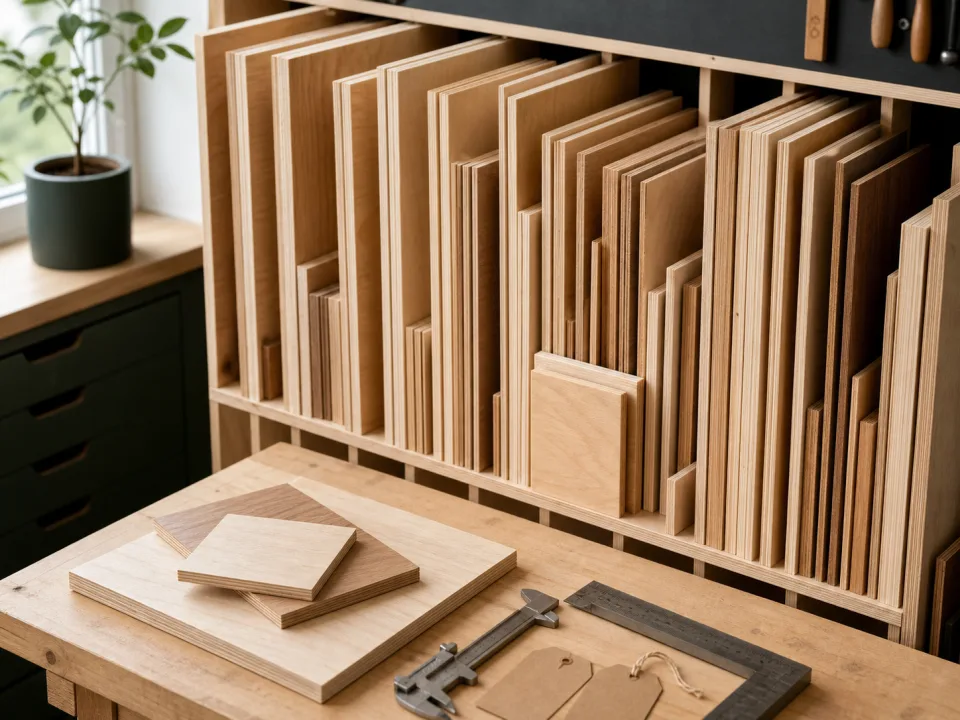
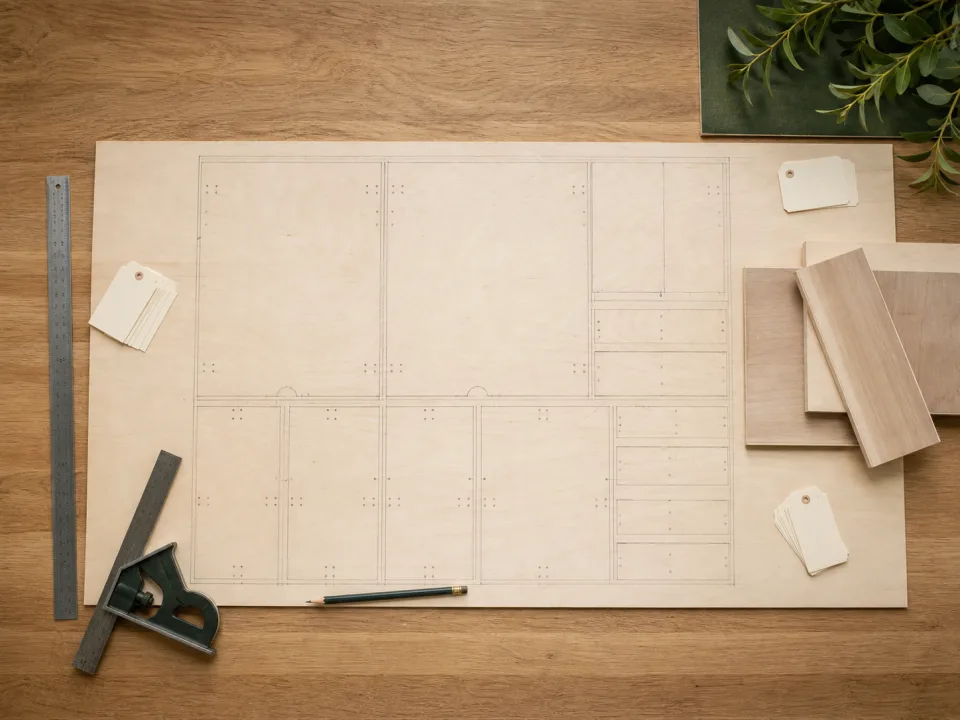
A reliable working sequence is to correct the list before optimizing, compare layouts by purchased sheets, save only reusable rectangles, label offcuts immediately, and design future shop fixtures around standard remnants. The goal is not to add paperwork. It is to make the next action obvious and to expose a bad assumption while correction still costs minutes instead of material, travel, or client trust.
Check Physical Fit, Not Just the Math
Area totals, nominal room sizes, product counts, and attractive drawings are useful starting points, but they do not prove physical fit. Rectangular parts must fit on real sheets after kerf and grain rules. Cabinets must fit rooms after walls, floors, doors, utilities, hardware, and service access are considered. Review the plan against the place and tools that will actually be used.
Avoid the Most Expensive Failure
The recurring failure is saving every scrap without dimensions until the shop fills with pieces that cannot be found or reused. Put a deliberate check immediately before that point. Compare the current revision with the physical material or room, ask another person to verify high-consequence dimensions when possible, and stop if the next step depends on an unresolved assumption.
Where Plywood Waste Benchmark Fits
Plywood Waste Benchmark is the primary WoodCutTool resource for this workflow. Use it when rough dimensions and quantities need to become a visible plan that can be compared, revised, labeled, printed, purchased, cut, or installed. A tool can organize correct inputs and reveal conflicts; it cannot make an incomplete parts list or unverified room measurement true.
Connect SnapStock at the Right Handoff
SnapStock supports the adjacent workflow when you need to keep a searchable inventory of reusable panels, hardware, finishes, and replacement parts instead of buying duplicates. Keep the connection simple: use the same project name or cabinet ID, export only the information the next person needs, and preserve one authoritative source for dimensions and approvals.
Save the Final Revision
After the work is complete, record what changed between the first plan and the installed result. Preserve the final cut list, material choice, site-fit dimensions, costs, photos, and useful lessons. A clear closeout turns one successful project into a faster estimate and a safer starting point for the next one.
Compare
How to Reduce Plywood Waste: 12 Practical Shop Strategies planning options
| Approach | Useful for | Main risk | Better next step |
|---|---|---|---|
| Memory or quick note | Capturing the first idea | Quantities, assumptions, and changes disappear | Move the project into a named parts list or checklist |
| Area or count estimate | Early budget range | Does not prove rectangles, clearances, or sequence | Test the complete list against real sheets and site constraints |
| Plywood Waste Benchmark | Creating and reviewing the core plan | Output is only as reliable as the inputs | Verify dimensions and inspect the execution sequence |
| SnapStock | Supporting the adjacent handoff | Can create a second source of truth | Share the same project ID and keep approvals with the core record |
Field Checklist
- Define the decision: whether a leftover is true waste, a reusable offcut, or evidence that the layout needs another revision.
- Verify the controlling inputs: accurate quantities, real kerf, sheet defects, grain locks, material groups, trim cuts, offcut dimensions, storage limits, and future standard parts.
- Follow the reviewed sequence: correct the list before optimizing, compare layouts by purchased sheets, save only reusable rectangles, label offcuts immediately, and design future shop fixtures around standard remnants.
- Stop before this failure: saving every scrap without dimensions until the shop fills with pieces that cannot be found or reused.
- Use Plywood Waste Benchmark for the core plan and SnapStock only at its relevant handoff.
FAQ
Common questions
What is the short answer to “how to reduce plywood waste”?
Start by deciding whether a leftover is true waste, a reusable offcut, or evidence that the layout needs another revision, then verify the inputs and review the physical workflow before acting.
What should be measured or confirmed first?
Confirm the variables that can change the result: accurate quantities, real kerf, sheet defects, grain locks, material groups, trim cuts, offcut dimensions, storage limits, and future standard parts. Do not hide assumptions inside finished dimensions.
Why is a calculator or spreadsheet not enough?
Totals can estimate scale, but real parts need to fit real sheets, rooms, hardware, tools, and installation sequences.
When should I use Plywood Waste Benchmark?
Use Plywood Waste Benchmark when the idea needs to become a visible, saved, and reviewable working plan.
Why connect SnapStock?
SnapStock is useful when the plan reaches the adjacent task: keep a searchable inventory of reusable panels, hardware, finishes, and replacement parts instead of buying duplicates. It should support the project, not duplicate its source of truth.
Sources